
Urinalysis test guide
Urinalysis: Purpose, Procedure, and Interpretation
Urinalysis is a medical test where healthcare providers examine a urine sample to assess a wide range of health conditions, such as urinary tract infections (UTIs), kidney disease, and diabetes. This test evaluates urine’s appearance, concentration, and chemical content, offering insights into both specific health issues and overall wellness.
Why is a Urinalysis Done?
Providers perform a urinalysis for several common reasons:
- Checking overall health: Often part of routine check-ups, a urinalysis helps screen for conditions like diabetes, kidney disease, and liver disease, especially during hospital admissions, pregnancy, or pre-surgery evaluations.
- Diagnosing medical conditions: This test can identify the causes of symptoms like abdominal pain, back pain, frequent or painful urination, and blood in the urine, helping providers to diagnose various urinary and systemic conditions.
- Monitoring a condition: For individuals with kidney disease, UTIs, or other conditions, regular urinalysis helps track changes and monitor the effectiveness of treatments.
Preparing for a Urinalysis
Preparing for a urinalysis is straightforward, but here are a few helpful tips:
- If only a urinalysis is scheduled, eating and drinking beforehand is typically fine. However, if other tests are involved, your provider may ask you to fast.
- Inform your provider about any medications, vitamins, or supplements you take, as certain substances may influence test results.
What to Expect During the Urinalysis
Providers can collect a urine sample at their office, or they may instruct you to collect it at home. They generally provide containers and instructions for sample collection. The clean-catch method is the usual way to collect a sample:
- Clean the area around the urinary opening (women should clean from front to back; men should wipe the tip of the penis).
- Begin urinating into the toilet, then collect 1-2 ounces (30-60 ml) of midstream urine in the container.
- Finish urinating in the toilet.
If immediate delivery isn’t possible, refrigerate the sample to keep it fresh until you can submit it. When necessary, a provider may use a catheter to collect the urine sample directly from the bladder.
How Providers Analyze Urinalysis Results
Providers analyze the urine sample in three main ways: visual exam, dipstick test, and microscopic exam. Each test provides important information about health conditions and any unusual findings.
1. Visual Exam
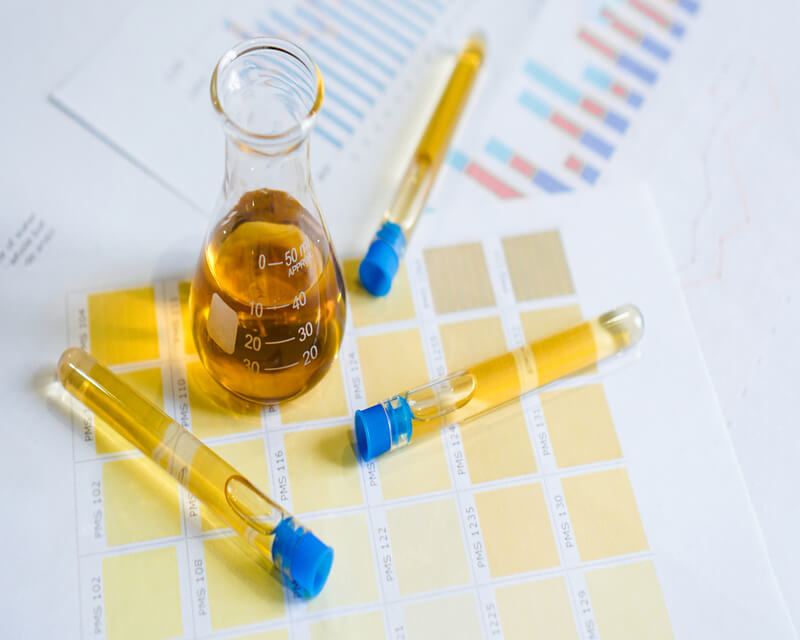
Lab technicians first observe the urine’s appearance. Healthy urine is usually clear. Cloudy urine or an unusual odor may indicate an infection, while dark or red-tinted urine might suggest the presence of blood, which can result from various conditions.
2. Dipstick Test
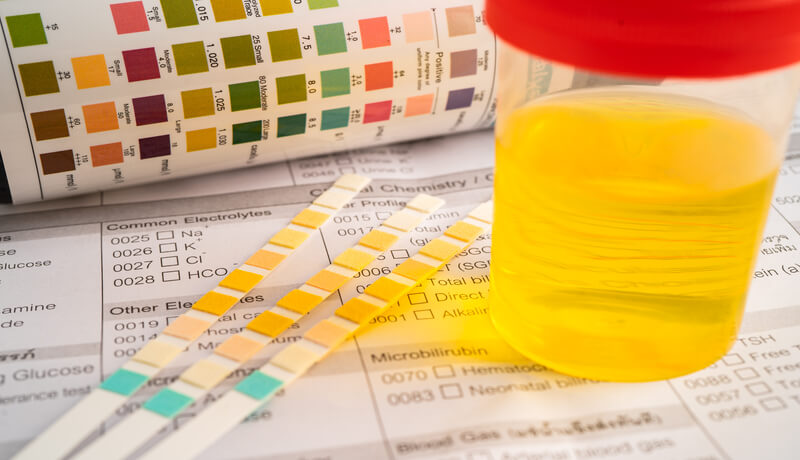
The dipstick test involves using a thin plastic strip with chemical-treated patches that change color when specific substances are present in unusual amounts. The dipstick checks for the following:
- Acidity (pH): This measures the acid level, with abnormal pH possibly indicating kidney or urinary issues.
- Concentration: High concentration may mean dehydration, while low concentration might indicate overhydration.
- Protein: Low protein levels are normal, but high protein levels could signal kidney damage.
- Sugar (Glucose): Detected glucose may indicate diabetes or other metabolic conditions.
- Ketones: Presence of ketones may suggest diabetes, particularly if blood sugar is poorly managed.
- Bilirubin: A waste product from red blood cells, bilirubin in urine could indicate liver issues.
- Infection markers: High levels of nitrites or leukocyte esterase may indicate a UTI.
- Blood: Blood in the urine can indicate kidney disease, infections, stones, or even cancer.
3. Microscopic Exam
In the microscopic exam, lab technicians examine drops of concentrated urine under a microscope. This part of the analysis detects:
- White blood cells: High levels suggest an infection.
- Red blood cells: High levels may indicate kidney issues, infections, or other health conditions.
- Bacteria, yeast, or parasites: Any presence suggests an infection.
- Casts: Tube-shaped proteins can signal kidney disorders.
- Crystals: Certain crystals may suggest kidney stones or other urinary issues.
Interpreting Urinalysis Results
Abnormal results in a urinalysis often lead providers to order further testing. This test is a helpful tool, but it may not provide a definitive diagnosis alone. Sometimes, urinalysis results only offer part of the story, especially for complex health conditions.
Common Follow-Up Actions for Abnormal Results
If your urinalysis results appear abnormal, providers may recommend additional tests. Here are some common findings and their typical follow-up steps:
- High protein levels: Providers may request further kidney function tests, such as blood tests or imaging.
- Presence of glucose: Additional blood glucose testing may confirm or rule out diabetes.
- Blood in urine: Providers may recommend imaging or a cystoscopy for closer examination.
- Infection signs: A urine culture could be conducted to identify specific bacteria.
Limitations of Urinalysis
While a standard urinalysis offers useful insights, it doesn’t always confirm a diagnosis. For example, a standard result doesn’t guarantee the absence of disease since some conditions may not show up in urine tests at certain stages. If you continue experiencing symptoms, make sure to tell your provider, even if your urinalysis results appear normal.
Other Tests Associated with Urinalysis
Urinalysis often stands alone but may also accompany other tests:
- Pregnancy Tests: Urine tests detect the hormone hCG to confirm pregnancy.
- Drug Screenings: Urine tests may identify substances not included in a typical urinalysis.
Conclusion
Urinalysis is a quick and non-invasive method for screening a range of health issues, including UTIs, kidney disease, and diabetes. Whether used in routine exams, diagnostics, or condition monitoring, it provides valuable insights into overall health. Remember to discuss your results with your healthcare provider, especially if they recommend additional tests to better understand your health status.
Request your Appointment by clicking on the picture below.