Fast COVID-19 Testing Options: PCR, Rapid Antigen, and Antibody Tests
The importance of accurate and reliable COVID-19 testing cannot be understated, as it plays a crucial role in controlling the spread of the virus. Below, we detail three types of COVID-19 tests available for home testing: the PCR molecular test, rapid antigen test, and antibody test. Each test serves a specific purpose and is suited for different stages of the infection. Healthcare professionals ensure that these tests follow the highest standards set by WHO and CDC.
PCR Molecular Test at Home (COVID-19 PCR Test)
The PCR test identifies the genetic material (RNA) of the SARS-CoV-2 virus using polymerase chain reaction (PCR). It is the most accurate method for detecting COVID-19. This test is particularly useful for those displaying symptoms or who have been exposed to the virus.
- Indications: Best performed after 48 hours of symptom onset or following known exposure, even if asymptomatic.
- Accuracy: PCR testing provides a 99% sensitivity rate, ensuring a highly reliable diagnosis.
Steps for Self-Administering the PCR Test at Home
- Thoroughly sterilize your hands with an alcohol-based solution.
- Pour the entire solution from the provided bottle into the extraction tube.
- Insert the swab deep into your nose until it reaches the nasopharynx (the back of your throat) and rotate the swab several times to collect a sufficient sample.
- Insert the swab into the extraction tube and stir for 15 seconds or as directed in your test kit instructions.
- Close the cap tightly and shake the tube vigorously to mix the solution.
- Add 3 drops of the solution to the sample port on the testing device.
- Wait for 10 minutes to observe the results displayed on the device.
Interpreting PCR Test Results
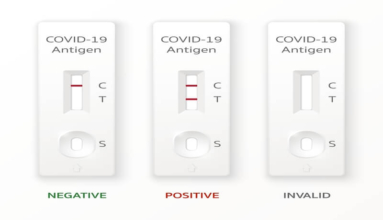
- Positive Self-Test: Two red lines will appear, one in the control area (C) and one in the test area (T), indicating a positive result.
- Negative Self-Test: Only one red line will appear in the control area (C), with no line in the test area (T), indicating a negative result.
- Invalid Self-Test: If no red line appears in the control area (C), the test is invalid, regardless of the presence of a line in the test area (T). You must repeat the test in this case.
Healthcare professionals typically use the One Step Real-Time PCR method to detect the RNA of COVID-19, ensuring compliance with global standards set by WHO and CDC. Samples are collected from either the nasopharyngeal or oropharyngeal regions, with nasopharyngeal swabs generally preferred for their higher accuracy.
Rapid Antigen Test at Home
The rapid antigen test detects the presence of viral proteins from the upper respiratory tract. It is particularly effective when the virus is in its peak or acute phase. This test offers a quick and convenient way to detect an active infection and provides results within 15 minutes.
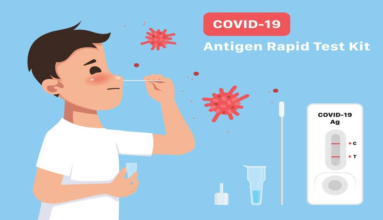
Steps for Self-Administering a Rapid Antigen Test
- Sanitize your hands thoroughly before handling the test kit.
- Open the swab packet and insert the swab into your nose, reaching the nasopharynx, and rotate it several times.
- Place the swab in the extraction solution tube and swirl it for the recommended time as stated in your kit’s instructions.
- Dispense the required number of drops (typically 3) into the sample port of the testing device.
- Wait for the results, which will appear within 15 minutes.
Understanding Rapid Antigen Test Results
- Positive Result: Indicates an active infection, and immediate isolation is recommended.
- Negative Result: Suggests no presence of the virus; however, if symptoms are present, follow up with a PCR test for confirmation.
The rapid antigen test uses immunochromatography or immunofluorescence techniques to detect the virus, providing a fast and efficient diagnostic tool.
Antibody Test at Home
The antibody test helps determine if someone has been previously infected with COVID-19. It detects two types of antibodies: IgM and IgG.
- IgM Antibodies: Typically develop around the 7th day of infection, indicating recent exposure.
- IgG Antibodies: Develop approximately 15-28 days after symptoms start and can remain for months, suggesting past infection and potential immunity.
SOS Doctors provide antibody tests for both IgM and IgG antibodies. These can be done individually or as a combined test, depending on the patient’s requirements.
Procedure for Antibody Testing
A healthcare professional will collect a blood sample, and results are usually available within 24 hours. This test helps determine if you have previously been infected and may have developed immunity but does not diagnose an active infection.
Book Your COVID-19 Test Today
Request your online appointment by clicking on the picture below.